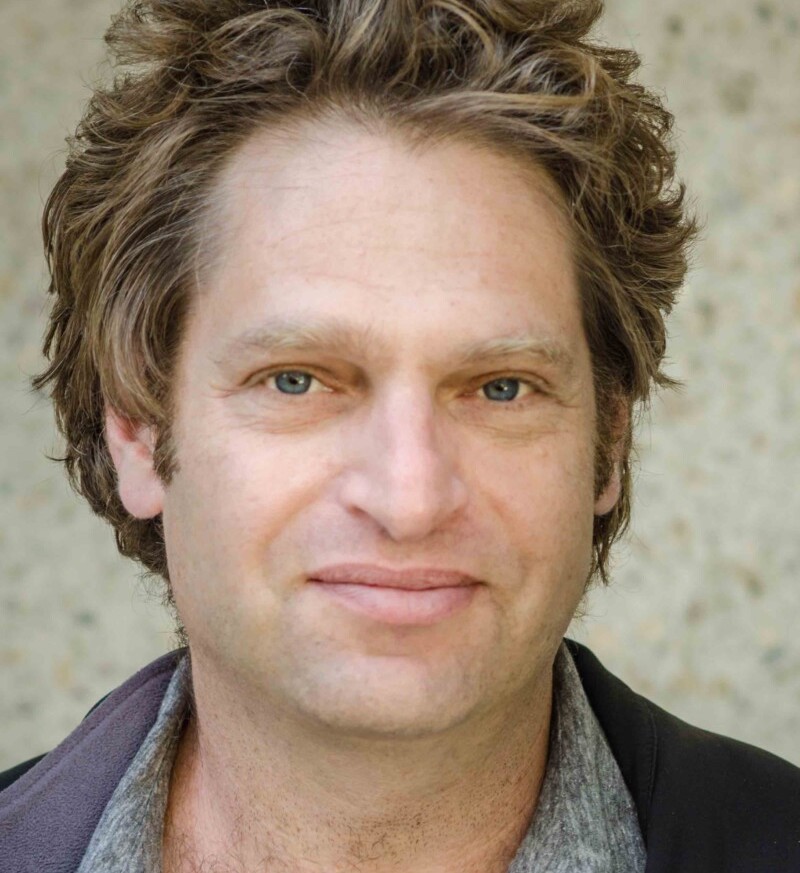
Terry Davidson, Professor of Psychology, American University


Title: Memory Mechanisms Linking Obesity to Cognitive Decline

Faculty Host: Harvey Grill

URL for more information: 

https://www.american.edu/cas/faculty/terryd.cfm

-
Location

NBS (425 S. University Ave.)

Wendy De La Rosa, Assistant Professor, University of Pennsylvania

Title: Budgeting Strategies & Consumer Behavior

-
Location

NBS

425 S. University Avenue
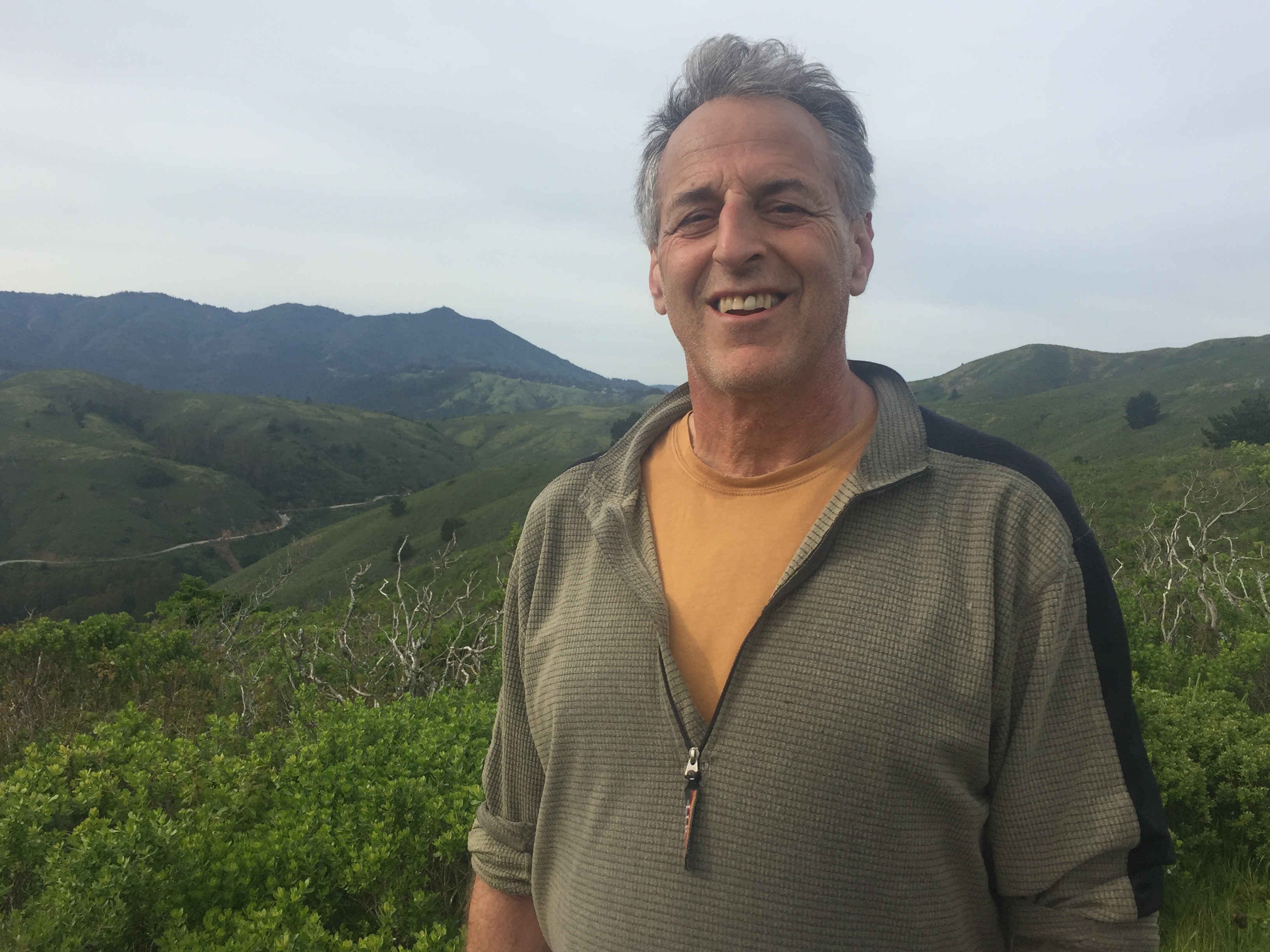
Tor Wager, Associate Professor of Department of Psychology & Neuroscience, University of Colorado at Boulder

-
Location

Stiteler Hall B21 (208 South 37th Street)

Host: Sharon Thompson-Schill

Title: TBA

URL for more info: 

http://wagerlab.colorado.edu/

Dima Amso, Associate Professor of Cognitive, Linguistic, and Psychological Sciences Department, Brown University


Title: Mechanisms of attention, learning, and plasticity early in life

Faculty Host: Allyson Mackey

URL for more information: 

https://www.brown.edu/Departments/CLPS/people/dima-amso

-
Location

NBS (425 S. University Ave.)

Adam Aron, Professor, University of California, San Diego

Title: Why Social Mobilization Is Essential For Confronting the Climate Crisis And What Academic Psychologists Can Do

Host: Russell Epstein

Abstract: Global heating appears to be accelerating and to prevent it from disrupting organized existence we must quickly and substantially reduce the burning of fossil fuels, reduce consumption and demand, and achieve a just transition to renewable energy. Local decision makers, including university chancellors, and city and state officials generally have not, and will not, implement policy in a timely way to leave fossil fuels in the ground without being impelled by a large-scale social mobilization.

I will speak about social mobilization from my perspective as an academic who quit a career in cognitive neuroscience to focus on the climate crisis. I will provide some examples of successful social mobilization from our organizing efforts within the University of California and the overlap with psychology research. 

I will argue that insofar as the fields of environmental and social psychology have concerned themselves with the climate crisis they have mostly done so through studies of individual rather than collective action. Even when these fields focus on collective action, they have almost entirely been limited to cross-sectional survey studies (often online), and self-reported actions or hypothetical intentions. Instead I will discuss how we are trying to pioneer a new kind of field study: we teach research participants to organize for climate action and study the psychological factors that predispose them and make them successful.

Bio: Adam Aron is a climate activist and professor of psychology at the University of California, San Diego. His research and teaching now focus on the social science of collective action on the climate crisis. His climate activism has been through the Green New Deal at UC San Diego where he has volunteered on several campaigns such as fossil fuel divestment and also campus decarbonization via ElectrifyUC, and he has also produced the documentary Coming Clean: A Demand for a Fossil-Free UC. 

Adam recently authored the book: The Climate Crisis: Science, Impacts, Policy, Psychology, Justice, Social Movements, Cambridge University Press, 2023. Before switching to the climate crisis, Adam had a successful career in cognitive neuroscience. He earned his PhD from the University of Cambridge, and was a postdoctoral fellow at UCLA. 

-
Location

NBS

425 S. University Avenue

Joe LeDoux, Henry and Lucy Moses Professor of Science, Department of Psychology, NYU

-
Location

Stiteler Hall B21 (208 South 37th Street)

Host: Isabel Muzzio

Title: TBA

Rebecca Saxe, Professor of Brain and Cognitive Sciences, Massachusetts Institute of Technology


Title: Early origins of social brain

Faculty Host: Anna Jenkins

URL for more information: 

http://saxelab.mit.edu/

-
Location

NBS (425 S. University Ave.)

Rich Ivry, Distinguished Professor of Psychology and Neuroscience, UC Berkeley

Title: Probing the Role of the Cerebellum in Sensorimotor Learning and Cognition

Host: Johannes Burge

Abstract:  An impressive body of research over the past 35 years has implicated the human cerebellum in a broad range of functions, including motor control, perception, language, working memory, cognitive control, and social cognition. The relatively uniform anatomy and physiology of the cerebellar cortex has given rise to the universal cerebellar transform hypothesis (UCT), the idea that the cerebellum can be conceptualized as a module providing a basic computation that is exploited across diverse domains. Proposed UCTs focus on the concepts of prediction and coordination.  To make these ideas computationally meaningful, we need to specify the constraints on cerebellar processing: What are the types of prediction supported by the cerebellum and what do we mean when speaking of “mental coordination”?  I will address these questions in two parts.  First, I will review experiments that employ variants of sensorimotor adaptation tasks to examine how processes associated with action selection and motor execution interact during sensorimotor adaptation. Using these methods, we find a dual deficit in individuals with cerebellar degeneration:  In addition to their well-described impairment in implicit adaptation, they also are impaired in implementing a strategy to facilitate learning.  In the second part of the talk, I will describe how the results have motivated a new hypothesis concerning how the cerebellum might contribute to cognition, focusing on its role in supporting dynamic mental transformations.

Bio: Rich Ivry is a professor of psychology and neuroscience at the University of California, Berkeley.   He directs the Cognition and Action lab, using various tools of cognitive neuroscience to explore human performance in healthy and neurologically impaired populations. Prof. Ivry has a long-standing interest in the cerebellum, seeking to understand the role of this subcortical structure in skilled movement, timing, and, through its interactions with the cerebral cortex, cognition. 

-
Location

NBS

425 S. University Avenue

Thomas Griffiths, Associate Professor of Department of Psychology, UC Berkeley

-
Location

Stiteler Hall B21 (208 South 37th Street)

Host: Isabel Muzzio

Title: TBA

Keith Holyoak, Distinguished Professor, Department of Psychology, UCLA


Title: "Semantic Relations in Minds, Brains, and Machines"

Faculty Host: Sudeep Bhatia

URL for more information: 

http://reasoninglab.psych.ucla.edu/

-
Location

NBS (425 S. University Ave.)

Randy L. Buckner, Sosland Family Professor of Psychology and of Neuroscience, Harvard University

Host: Mike Arcaro

Title: Precision Estimation of Large-Scale Network Organization in the Human Brain


Human association cortex is populated by a series of large-scale networks. In terms of organization, the multiple networks form an orderly progression that radiates outwards from sensory-motor networks to transmodal association networks that underlie advanced forms of human cognition. In-depth analysis within individuals reveals anatomical details including that functionally distinct networks are intertwined throughout multiple zones of association cortex, raising questions about how they evolved and how they differentiate during development. Interestingly, it was found quite recently that monkeys, including the genetically accessible marmoset, possess association networks that recapitulate many of the human features. These parallels provide an opportunity to connect experiments in animal models of large-scale circuits to work and clinical interventions in the human. What is further revealing is that the networks that populate the transmodal zones of association cortex, within the regions estimated to be preferentially expanded in hominid evolution, possess three distinct spatially juxtaposed networks in the human for (1) language, (2) making social inferences, and (3) remembering. All share a common organizational motif with the same general pattern of distributed connectivity but they occupy spatially adjacent regions of cortex and can be functionally dissociated from one another. A parsimonious idea is that the same general circuit motif, arising at least 50 million years ago in primates, has expanded and specialized into multiple similarly organized, differentially specialized distributed networks that populate the expanded zones of human association cortex in support of the human niche’s cognitive toolkit.


-
Location

NBS

425 S. University Avenue

A. David Redish, Distinguished Professor, Department of Neurosicence, University of Minnesota

-
Location

Stiteler Hall B21 (208 South 37th Street)

Host: Joseph Kable

Title: TBA

Ishmail Abdus-Saboor, Assistant Professor, Department of Biology, University of Pennsylvania


Title: "Genetic and behavioral dissection of neural circuits for touch and pain"

Faculty Host: Rebecca Waller

URL for more information: 

https://www.abdus-saboorlab.com/new-page-1

-
Location

NBS (425 S. University Ave.)

Kia Nobre, Wu Tsai Professor of Psychology, Yale University

Title: The flexible character of internal focus

Host: Anna Schapiro

-
Location

NBS

425 S. University Avenue

Paul Frick, Professor, Department of Psychology, Louisiana State University


Title: "What makes some youth aggressive and violent and what can we do about it?

Faculty Host: Rebecca Waller

URL for more information: 

https://www.lsu.edu/hss/psychology/faculty/clinical/frick.php

-
Location

NBS (425 S. University Ave.)

Anna Papafragou, Professor of Linguistics, University of Pennsylvania

Title: ‘Events in mind and language’
 
Host: John Trueswell
 
-
Location

NBS

425 S. University Avenue