Calendar A-Z Index School of Arts and Sciences University of Pennsylvania
Home
»  Martin Seligman
  • Home
  • People
  • Undergraduate Program
  • Graduate Program
  • Research Areas
  • Participate in Research
  • Talks, News and Events
  • Related Sites
  • Resources
  • Contact

   PennWebLogin

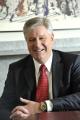
Martin Seligman

Zellerbach Family Professor of Psychology; Director of the Positive Psychology Center

Department: 
Psychology

Education: 
AB, Philosophy, Princeton University; Ph.D., Psychology, University of Pennsylvania
Address: 
Positive Psychology Center, 3701 Market St. Room 205
Phone: 
215-898-7173
Email: 
seligman@psych.upenn.edu

Personal Page

Lab Page

Research Themes: 
Psychopathology and Psychotherapy
Memory and Learning
Positive Psychology
Specific Research Areas: 
Positive Psychology, optimism, learned helplessness, and depression
Research Synopsis: 

Positive Psychology, optimism, learned helplessness, depression, and comprehensive soldier fitness.

Appointments: 

Psychology Graduate Group

Advisees: 
  • Alejandro Adler-Braun [Psychology Graduate Student]
  • Johannes Eichstaedt [Psychology Graduate Student]
  • Marie Forgeard [Psychology Graduate Student]
  • Xuan Gao [Psychology Graduate Student]
  • Peggy Kern [Post-doc]
  • Gregory Park [Post-doc]
  • Ann Roepke [Psychology Graduate Student]
Representative Publications: 

Seligman, M., Railton, P., Sripada, C., & Baumeister, R. (2012 in press). Navigating into the future or driven by the past. Perspectives.

Seligman, M.E.P., Flourish (2011) N.Y.: Simon & Schuster

Seligman, M.E.P., Gillham, J., Reivich, K., Linkins, M., & Ernst, R. (2009). Positive Education.  Oxford Review of Education, 35(3), 293-311.

Seligman, M & Kahana, M. (2009).  Unpacking Intuition.  Perspectives on Psychological Science, 4(4), 399-402.

Seligman, M.E.P. (2008).  Positive Health.  Applied psychology:   An international review, 57, 3-18.

Seligman, M.E.P., Rashid, T., & Parks, A.C. (2006). Positive psychotherapy. American Psychologist, 61, 774-788.

Seligman, M. E P, Steen, T., Park, N., & Peterson, C. (2005). Positive psychology progress: Empirical validation of interventions. American Psychologist, 60, 410-421.

Peterson, Christopher & Seligman, M.E.P. (2004). Character strengths and virtues: A handbook and classification. Washington, D.C.: APA Press and Oxford University Press.

Seligman, M.E.P. (2002). Authentic Happiness: Using the New Positive Psychology to Realize Your Potential for Lasting Fulfillment. New York: Free Press/Simon and Schuster.

Chirot, D., & Seligman, M.E.P. (Eds.) (2001). Ethnopolitical warfare: Causes, consequences, and possible solutions. Washington, D.C.: APA Press.

Seligman, M.E.P., Walker, E., & Rosenhan, D.L. (2001). Abnormal psychology. (4th ed.) New York: W.W. Norton.

Gillham, J.E. (Ed). (2000). The Science of Optimism and Hope: Research Essays in Honor of Martin E. P. Seligman. Radnor, PA: Templeton Foundation Press.

Seligman, M.E.P. (1998). Learned Optimism. Second edition. New York: Pocket Books (Simon and Schuster).

Seligman, M.E.P., Reivich, K., Jaycox, L., and Gillham, J. (1995). The Optimistic Child. New York: Houghton Mifflin.

Buchanan, G. and Seligman, M.E.P. (Eds.). (1995). Explanatory Style. Hillsdale, N.J.: Erlbaum.

Seligman, M.E.P. (1994). What You Can Change and What You Can't. New York: Knopf.

Seligman, M.E.P. (1991). Helplessness: On Depression, Development, and Death. Second edition. New York: W.H. Freeman.